
Virtues of the Day of ‘Arafah (9th Dhul Hijjah)
1. ‘Ā’ishah radiyallāhu anhā reports that Rasūlullāh sallalāhu ‘alayhi wasallam said, ” There is no day in which Allāh sets free more souls from the fire of hell than on the day of ‘Arafah. And on that day Allāh draws near to the earth and by way of exhibiting His Pride remarks to the angels, ‘What is the desire of these (servants of mine)?” (Muslim)
2. Talha radiyallāhu ‘anhu reports that Rasūlullāh sallalāhu ‘alayhi wasallam said, “Apart from the day of the Battle of Badr there is no day on which the Shaytān is seen to be more humiliated, more rejected, more depressed and more infuriated, than on the day of ‘Arafah, and indeed all this is only because of beholding the abundance of descending mercy (on the day) and Allāh’s forgiveness of the great sins of the servants.” (Mishkāt)
3. Abū Qatādah Al-Ansāri radiyallāhu ‘anhu narrated that Rasūlullāh sallalāhu ‘alayhi wasallam was asked about the fast on the day of ‘Arafah. He said, “It compensates for the (minor) sins of the past and the coming year.” (Muslim, Tirmizī, Ibn Mājah)
Takbirāt of Tashrīq
The Takbirāt of Tashrīq are:
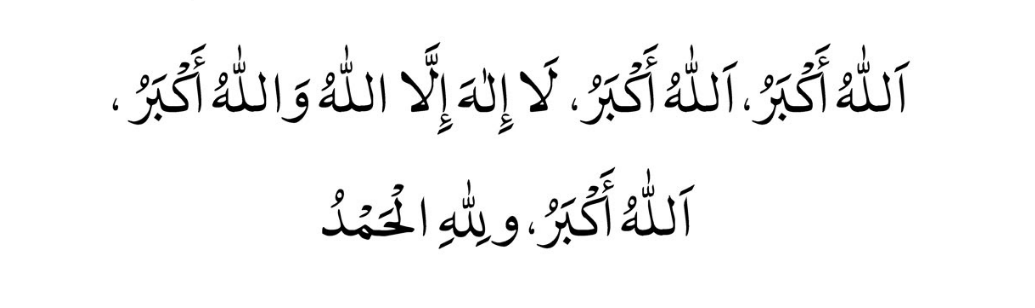 Allāhu Akbar, Allāhu Akbar, Lā ilāha illallāhu wallāhu Akbar, Allāhu Akbar, Walil lāhil hamd.
“Allāh is the Greatest, Allāh is the Greatest. There is no deity besides Allāh and Allāh is the Greatest. Allāh is the Greatest and all praises are for Allāh only.”
It is wājib for every adult Muslim to recite these Takbirāt of Tashrīq audibly once after every fardh salāh from the Fajr of 9th Dhul Hijjah to the ‘Asr of 13th Dhul Hijjah (i.e. total of 23 salāh).
Mas’alah: Women should not say it loudly but softly.
Mas’alah: Takbīr should be recited immediately after concluding the fardh prayer.
 Friday 20th March 2026 | 1 Shawwāl 1447
Leave a comment